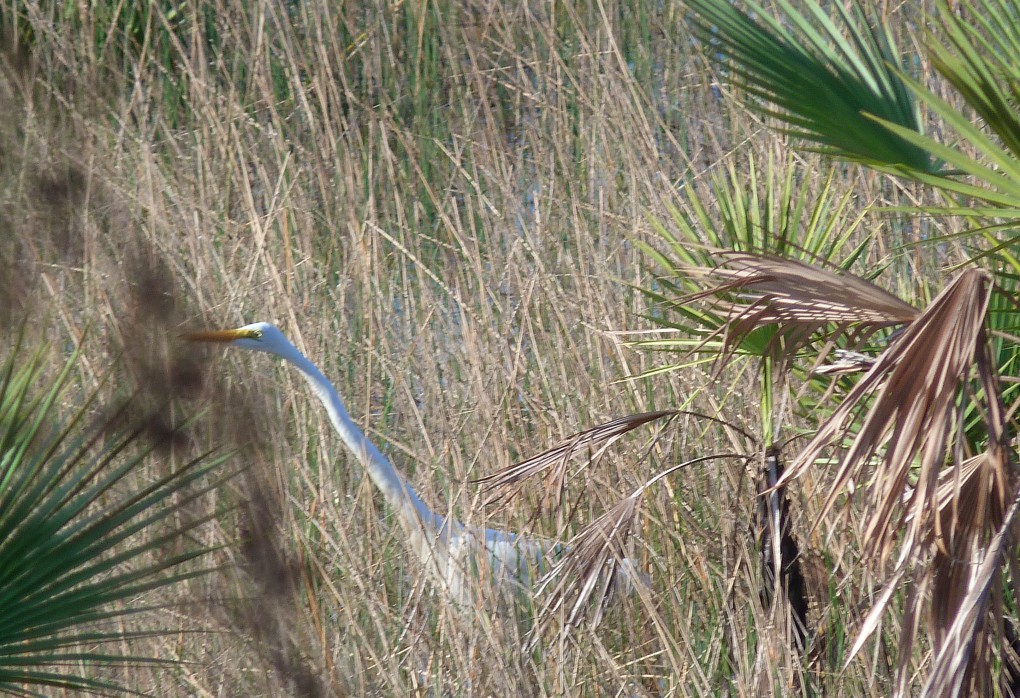
We had so much fun off roading with Pajjie in Jordan that we had hopes of doing the same in India when we arrived for two years in Chandigarh. Sadly, that was not to be given how hard it was to take leave time. Sahib did get off with friends P and S camping in Himachal Pradesh, we both made several weekend trips by road to Delhi, we did a road trip to Amritsar and the Golden Temple as well as one to Kasauli and Sahib also got off with his sisters during their visit.
In that hope, we ended up buying a well aged Maruti Gypsy with 4 wheel drive but no hi/low or wheel lock which, no surprise, ended up being called Gypsy. The only long trip we took with Gypsy was to Himachal Pradesh, following some of the route Sahib with our friends P and S and then going beyond to the base of Rotang La – a mountain pass with an elevation of 3,980 m (13,058 ft)) which is on the eastern end of the Pir Panjal Range of the Himalayas around 51 km (32 mi) from Manali in Himachal Pradesh connecting the Kullu Valley with the Lahaul and Spiti Valleys.
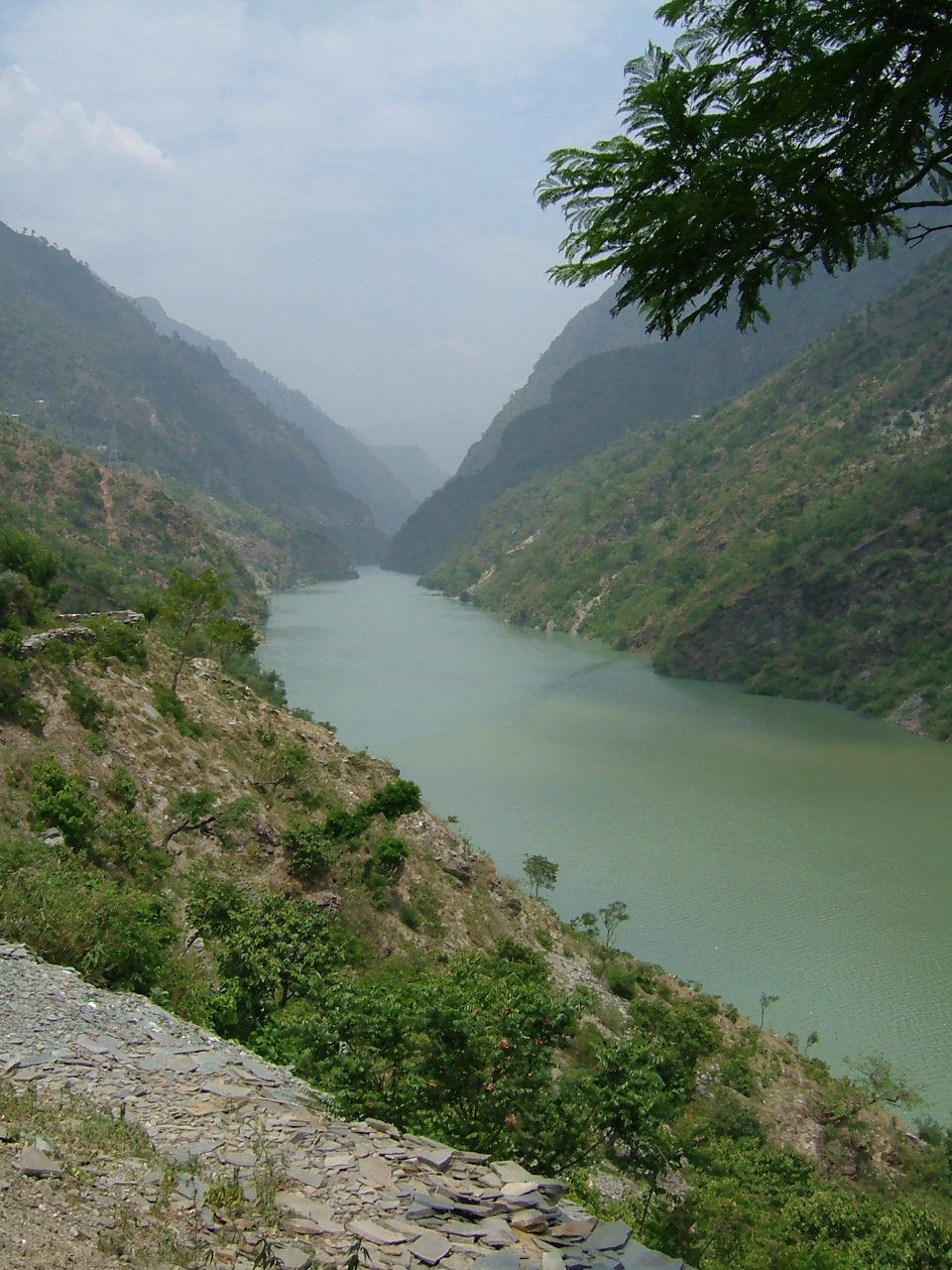
The Kullu Valley follows the Beas River into the mountains.
So, having a week’s leave, we headed off up the Kullu Valley. The first day we pretty well followed the Beas River and were heading to a town where Sahib and P and S had stayed. Unfortunately, we got thoroughly lost (despite having a pretty good set of maps). As dusk was falling we saw an empty meadow in deserted countryside across from a lonely gas station so we stopped and asked if it were possible to camp in the meadow. I am not sure they fully understood what we were asking but they said yes (okay, it was the Indian head wobble but we chose to identify it as permission!) so just as dusk was falling, we set up our tent, our small folding picnic table and our little propane burner with grill big enough to hold our pot and made supper before heading to bed for a very good night’s sleep. In the morning, we woke to the sounds of cows and, peering out of our tent, found them quite happily munching on what turned out to be marijuana plants in the meadow!
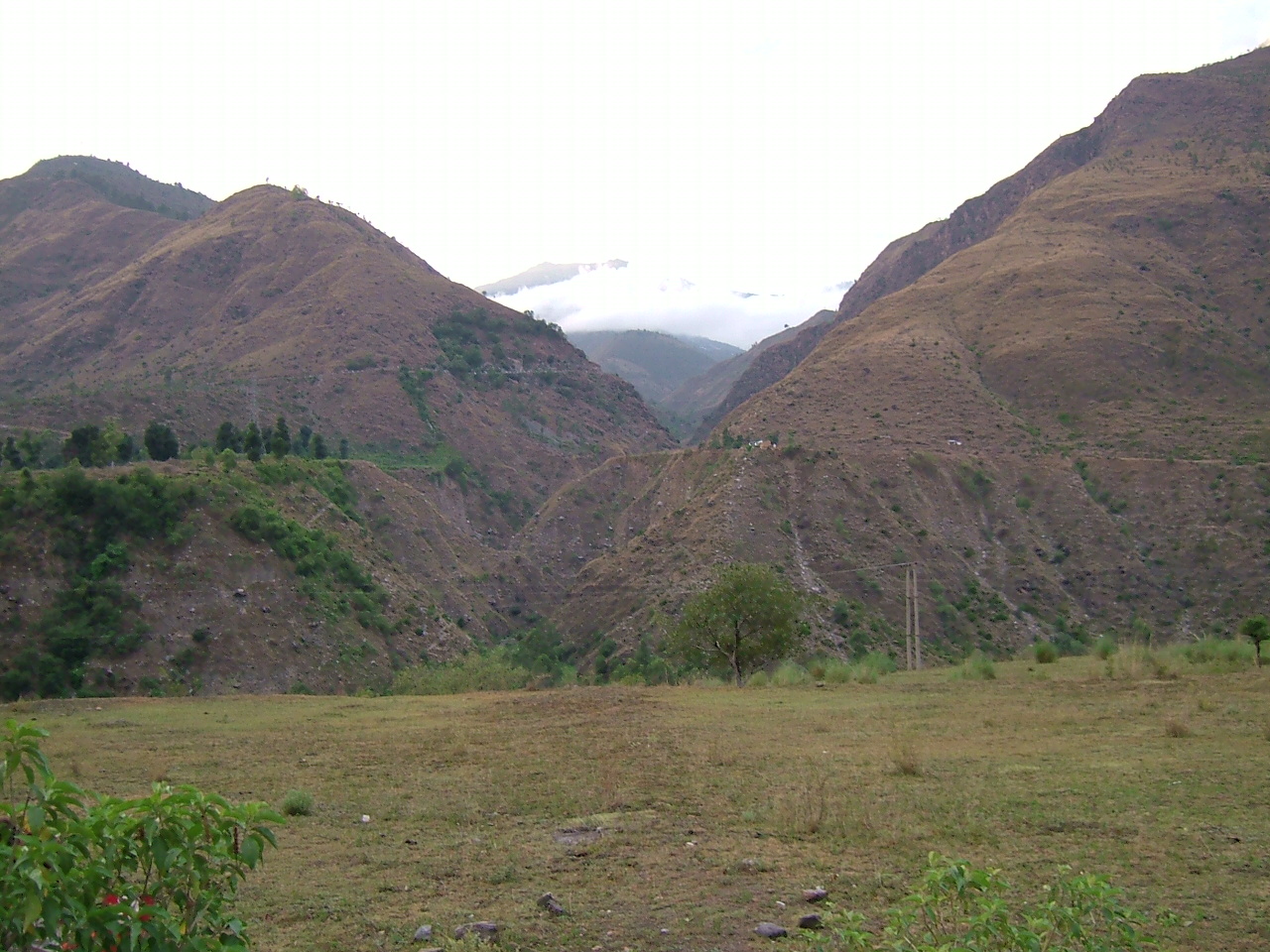
What we came to call the Happy Cow Meadow!
The following day, we carried on, found ourselves on the map and headed for the Jalori Pass. At 10,282 feet above sea level it is the first mountain pass heading north from New Delhi 600 km to the south. It was a narrow road, winding and steep. Gypsy was not thrilled with it – we had not had her carburetor set for high elevations and did not know how to do it ourselves. For the last kilometer of elevation we had to stop every few hundred metres, turn her off and wait while her radiator stopped boiling! However, we eventually made it to the top!
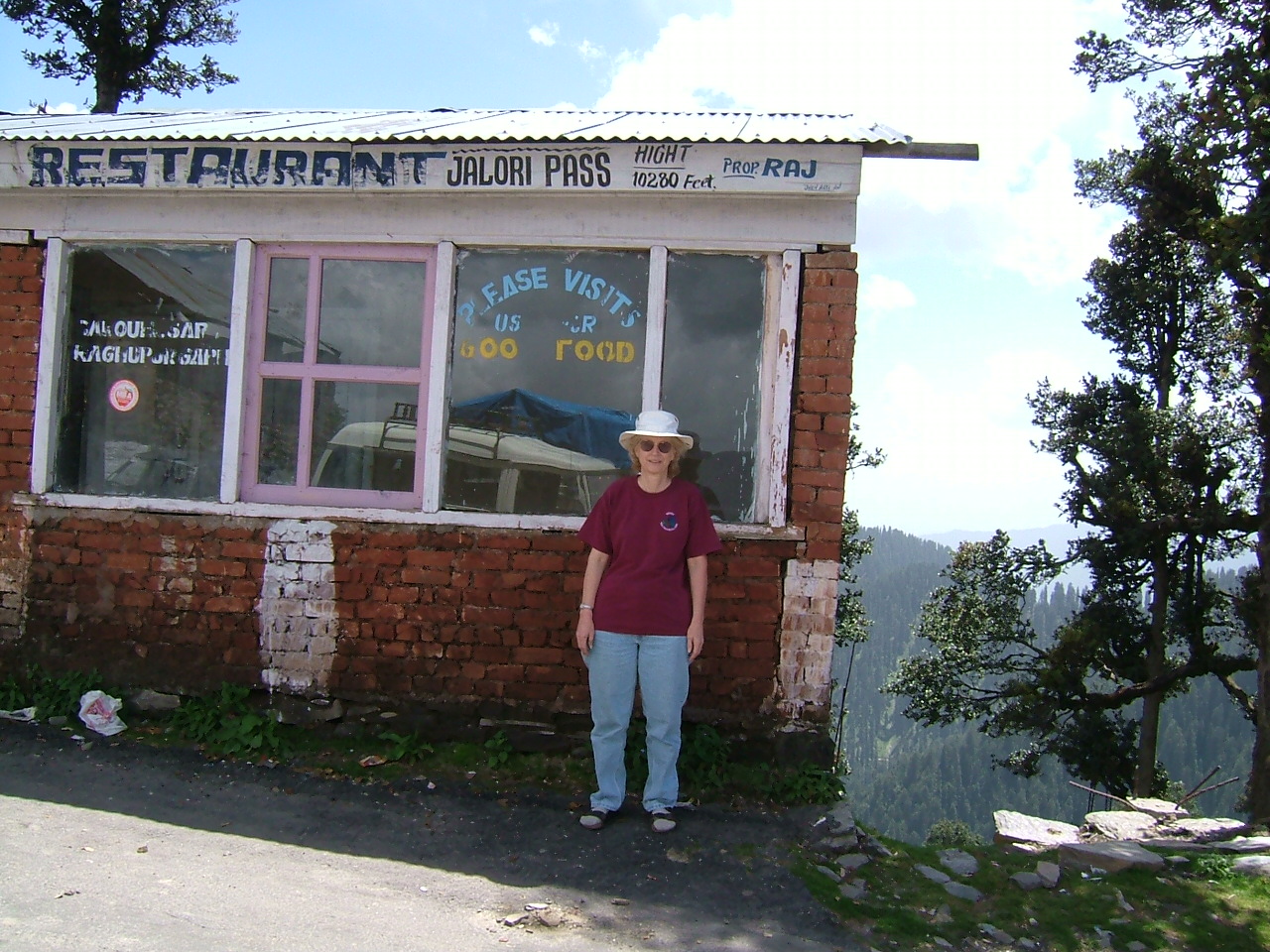
A closed restaurant at the top of the Jalori Pass.
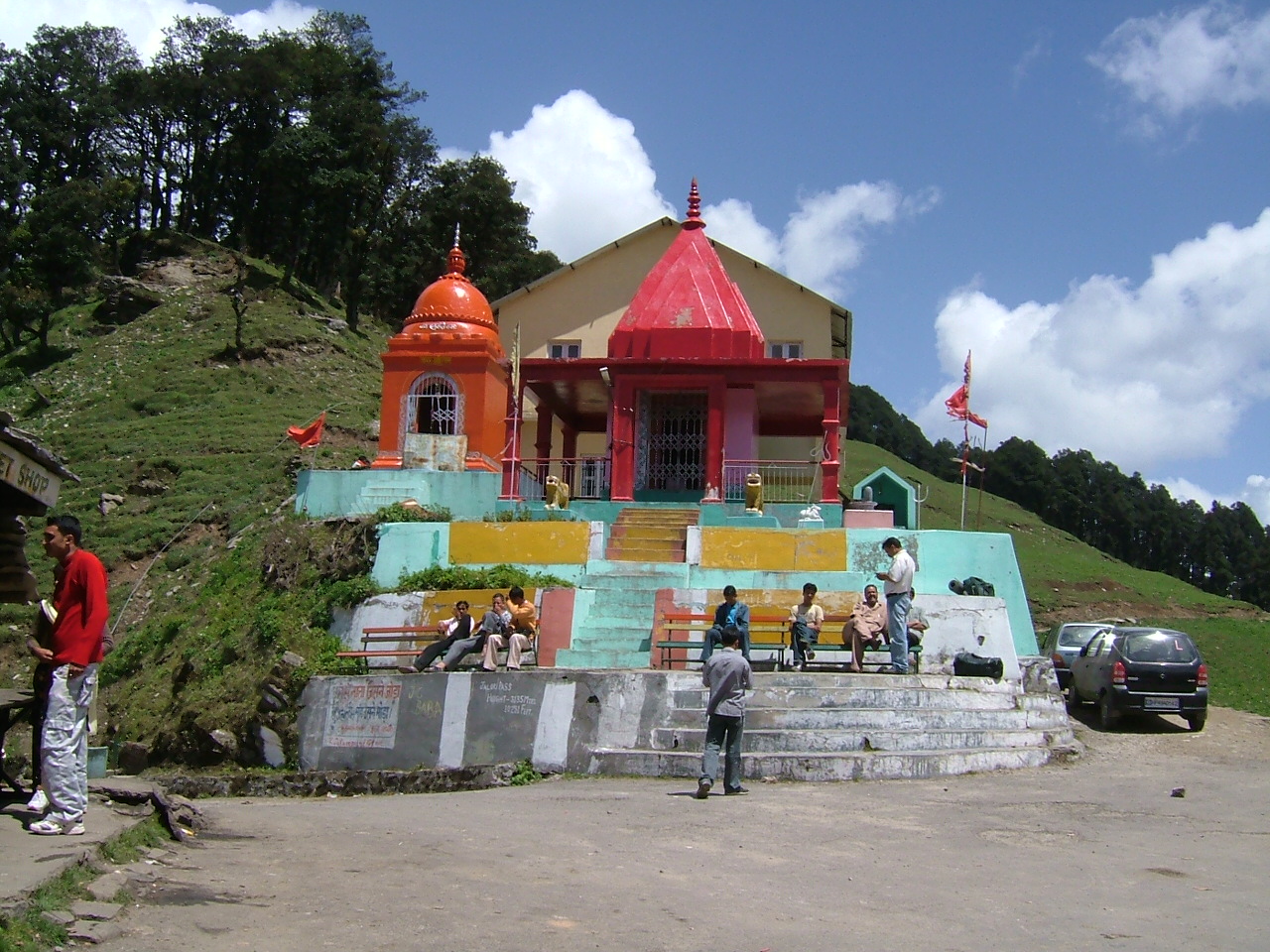
The temple at the top of the Jalori Pass. Online searches show that the temple has been expanded and redecorated in the intervening years.
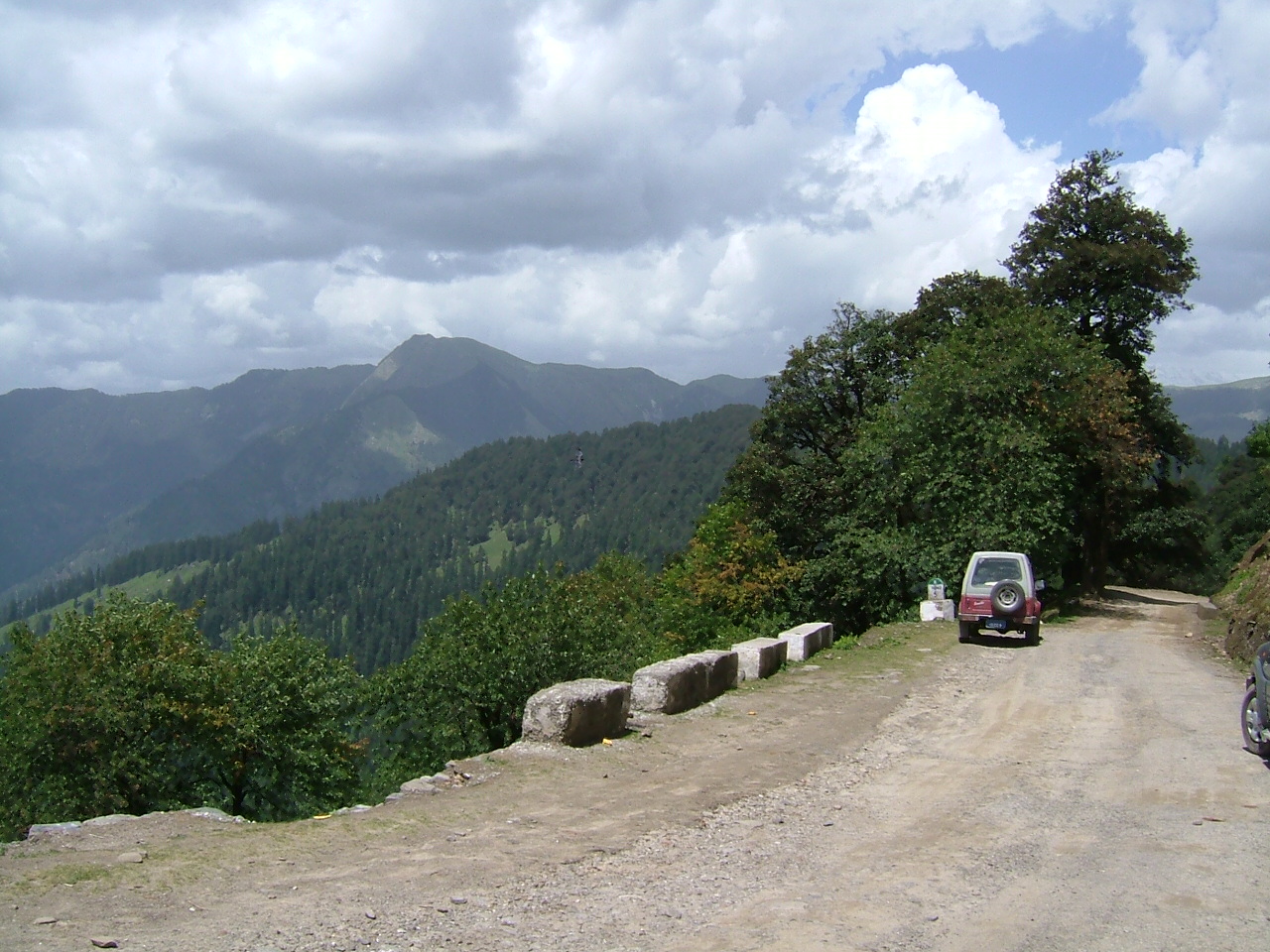
We stopped on the other side of the Jalori Pass to admire the view of the mountains while Gypsy patiently waited at the side of the road.
Onward we went to a place I can only call Jerry Beebi – a tiny village where, believe it or not, there was a formal “campground” of carefully laid out squares on which to pitch a tent and a (western) toilet block with a shower! Sadly, we neglected to take a picture of either Gypsy or the tent!
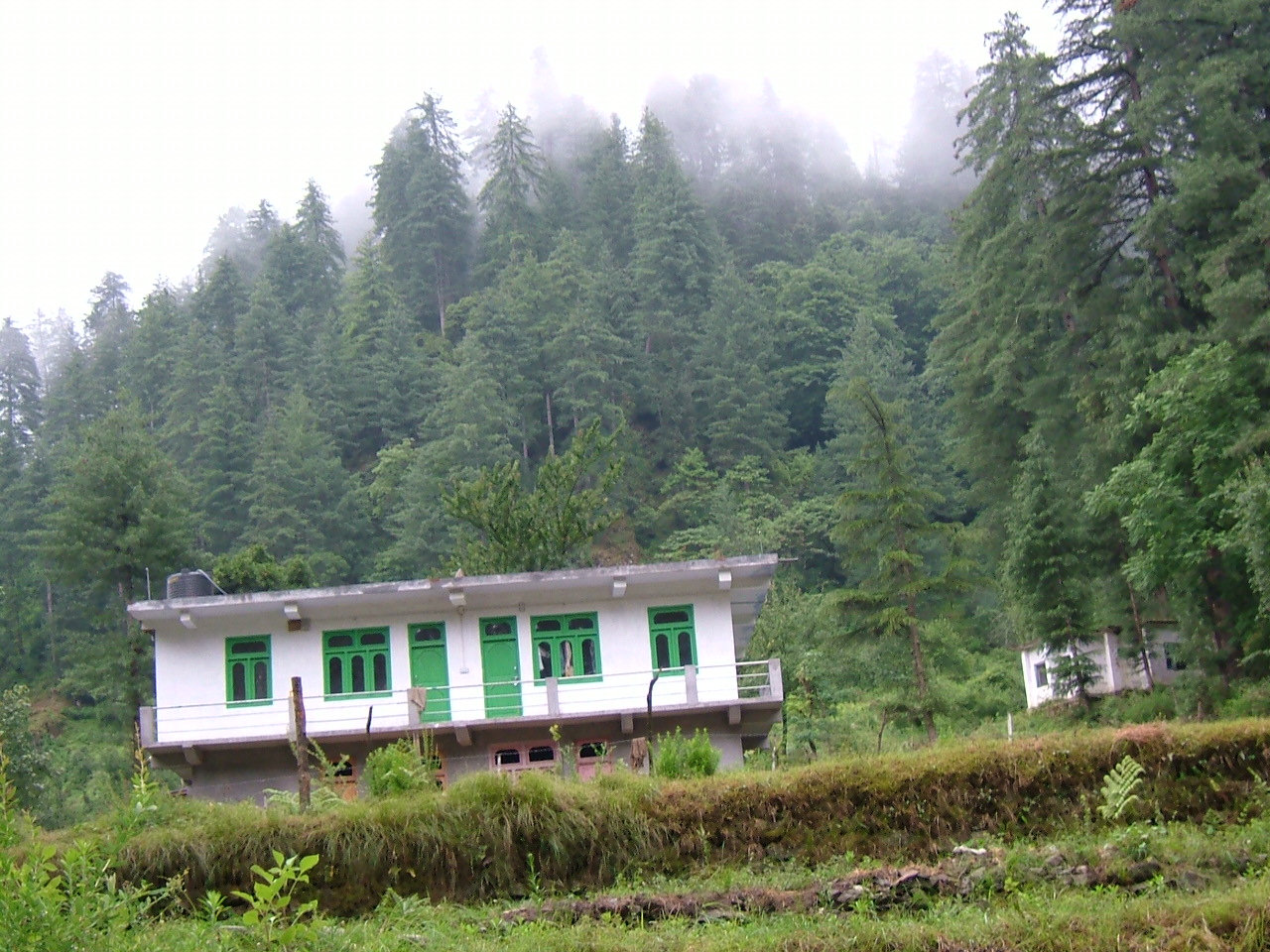
Above are the staff quarters for the attendants of the camp. Very new and well cared for. Our campsite had a small stream running behind it that gave us music to sleep the nights away (we were there for a couple of nights).
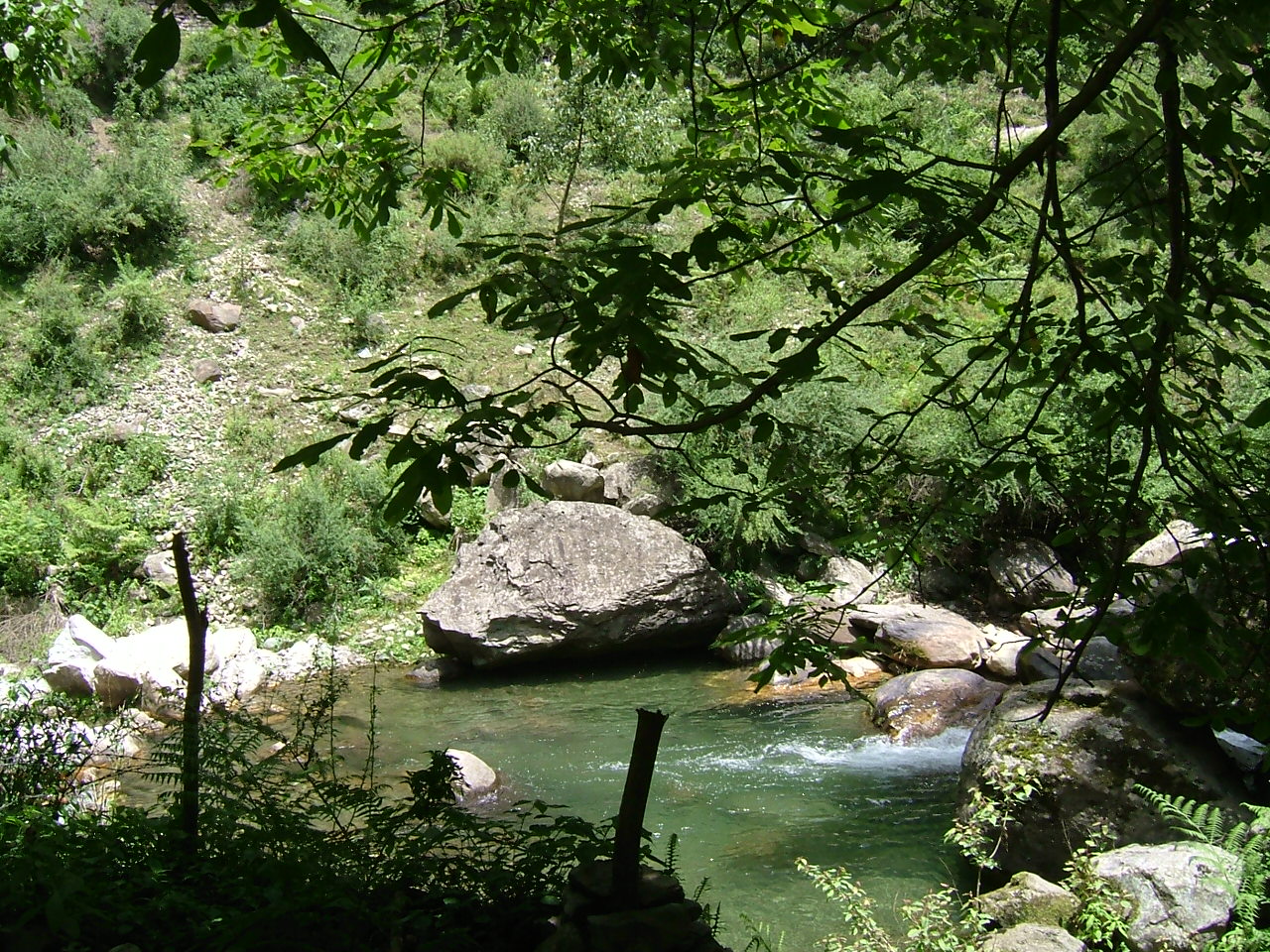
The stream behind our tent.
One afternoon we left the campground to go for a walk on the road that passed by. We were soon overtaken by a group of Indian girls – speaking English – and darned if there wasn’t a Canadian accent in the group. Turns out that they were nursing students from various hospitals – including one in Winnipeg – doing volunteer work at an outpost clinic of the Lady Willingdon Hospital in Manali. We walked on with them and they asked if we wanted to see the clinic and told us that there was a New Zealander doctor there with his family so the next afternoon they came down and got us and we hiked up to the clinic. It sure brought back memories for me: when I was in the air force, the hospital at the training base was straight out of the 1920’s – as was this clinic. It had an ancient x-ray machine, an examination room, a four bed ward and a lab that could do very basic blood and urine tests. The New Zealand doctor was actually an Iranian immigrant to NZ but his wife was a Kiwi and they had two (or maybe, three?) small children with them. He told us he found his work very rewarding and was enjoying the slower pace! We made a donation to the hospital and kept in touch with the doctor while we were in Chandigarh. Some months later, he called us up and said he and some Lady Willingdon staff were going to Delhi for a conference and could they stop to see us. We invited them for dinner and the night – putting the three girls upstairs and the two men downstairs in the den. After breakfast, they thanked us profusely for the hospitality as none of the Indian staff had expected such hospitality (I am not sure that they had ever stayed in a Westerner’s house) before we drove them to the train station. We also helped them fill in forms for a grant from the high commission’s charitable fund – they did not get it but were grateful for the opportunity to apply. Sadly, again, no photos of the clinic.
The next day we travelled back down to follow the Beas River. On our way, hunger hit and we stopped at the side of the road in a very small village crossroads and found someone with a tandoori oven making naan bread. Oh, it was heavenly hot and fresh out of the oven and cost about 5 rupees per naan! We also found someone selling the biggest, nicest garlic we have ever seen – we bought several pounds to take home. Going through the small towns and villages was hair raising given narrow roads and lots of pedestrians.
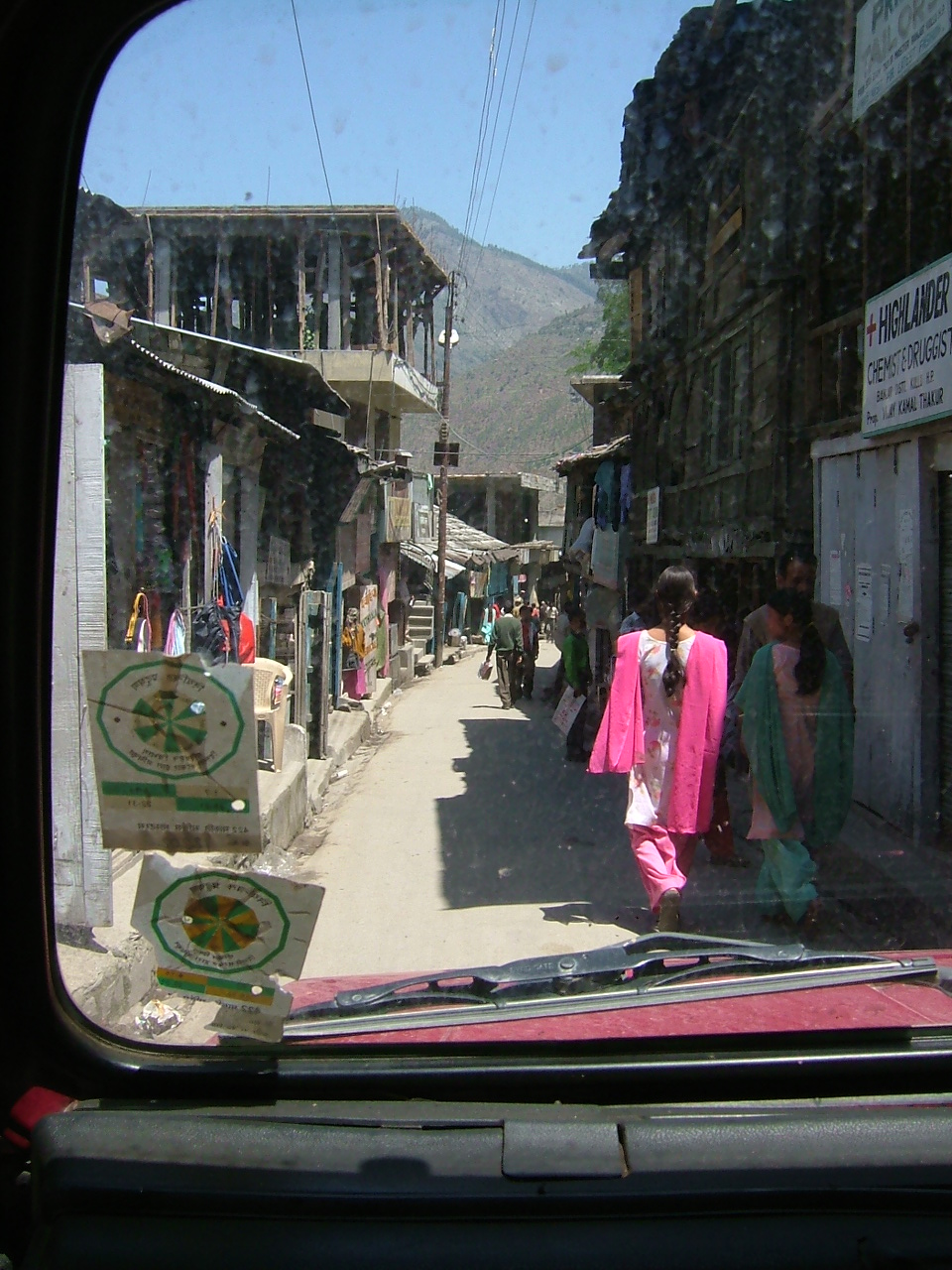
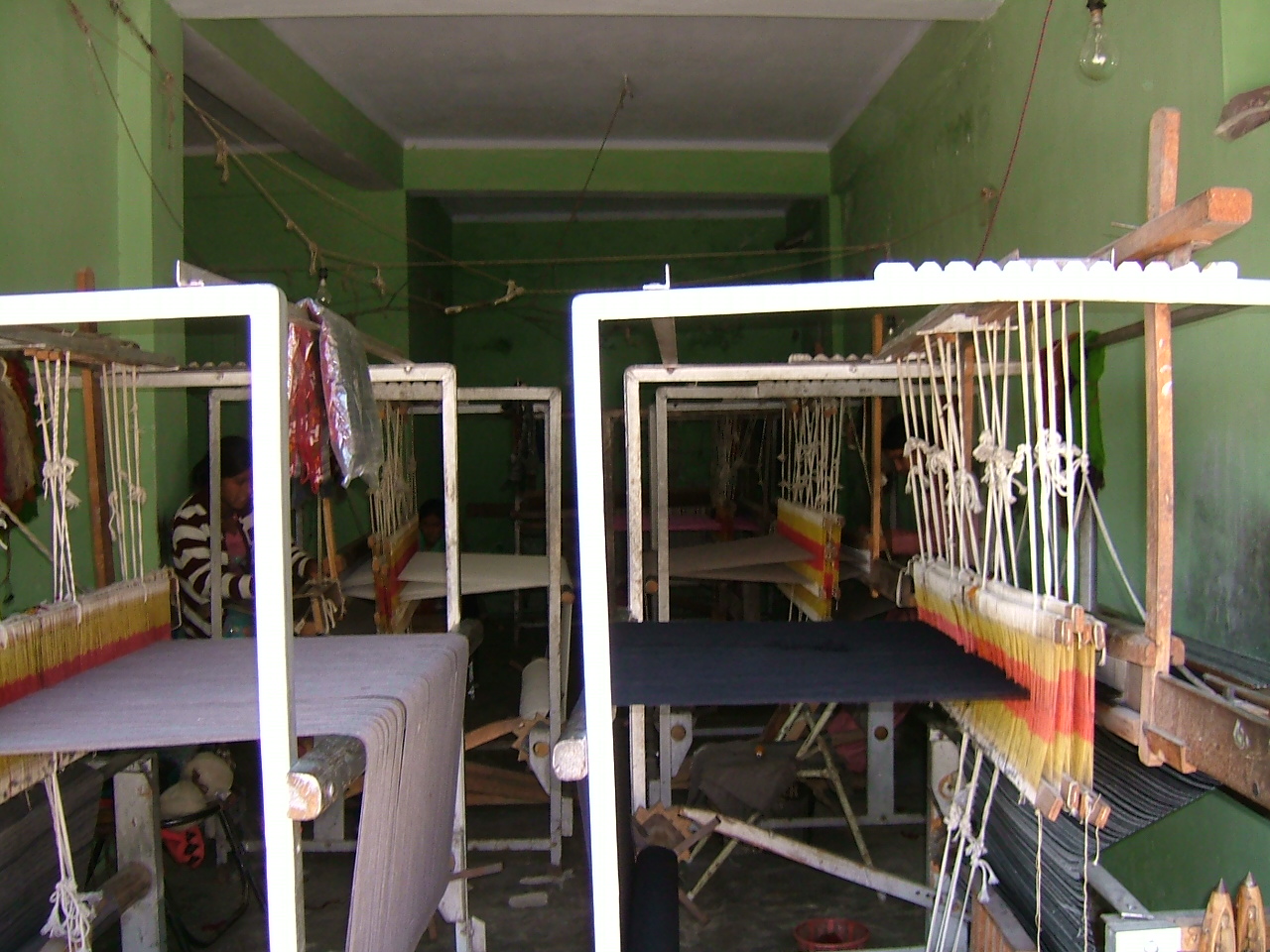
Regularly, going through towns, we came across the workshops of those making the famous Kullu shawls and bought one each.
Onward we went to Manali – a real tourist hotspot being up in the hills and much cooler in June than the plains. It was crowded with tourists and, honestly, did not appeal to us. We were hoping to get a hotel room but did not really like what we saw so headed toward Rotang La in the hopes that Gypsy would take us up and over but, unfortunately, she was not keen on the altitude as we approached the pass. Seeing a large wooded and meadowed area, we approached the guard on the gate to see if we could camp on the meadow below a rocky field. Turns out, it was the Border Security Force’s training base and we were welcome to do so as long as we parked the car at the top and walked our stuff down. We actually kept our food in Gypsy (not knowing what animals were around) and only took the tent, sleeping bag and mattresses down – cooking and dining al fresco beside Gypsy!
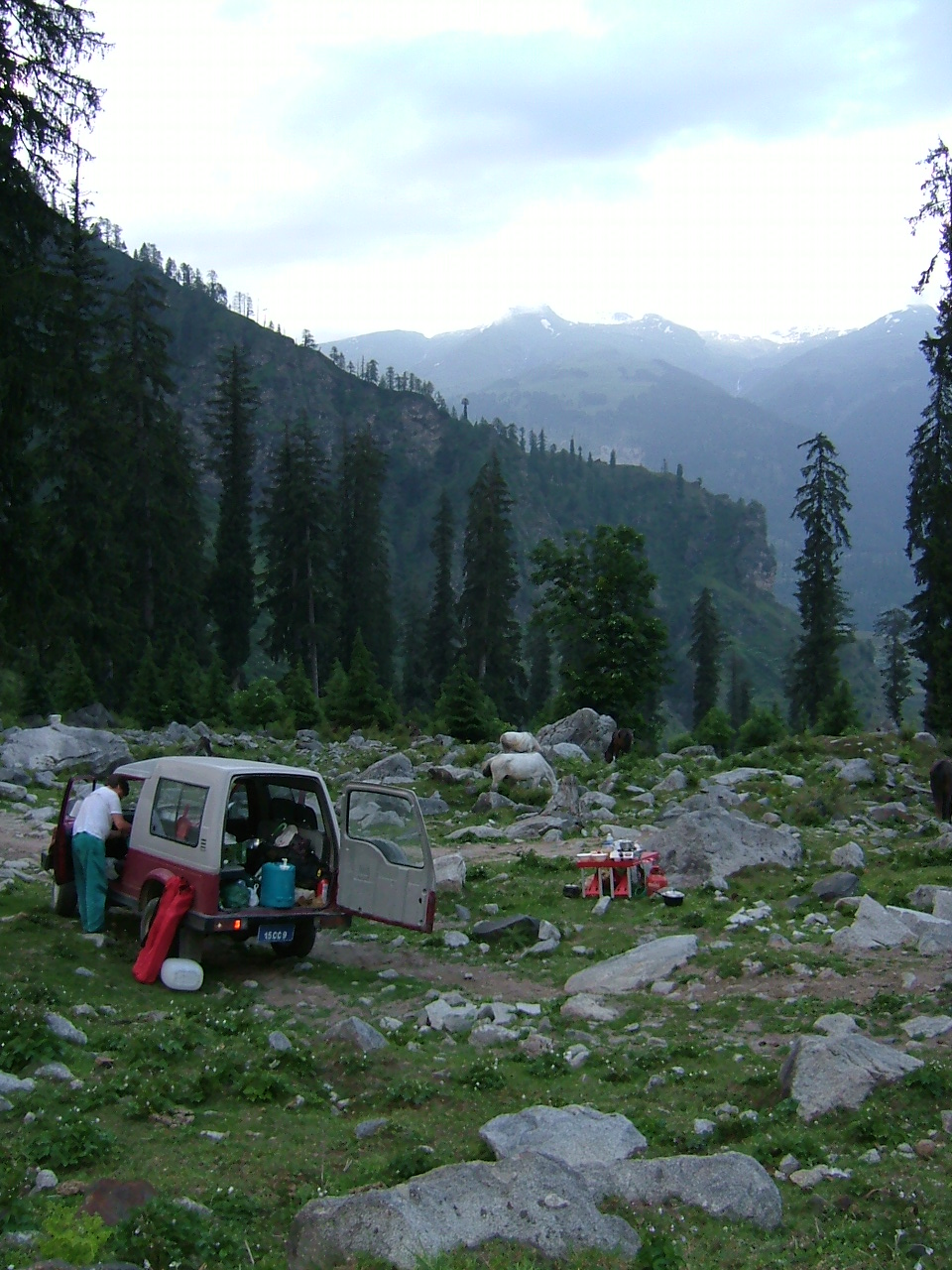
Gypsy at the end of the road with our folding picnic table (which we bought in the Netherlands on a camping holiday from Vienna and which we still have) to the right with our dishes and cooking utensils on it.
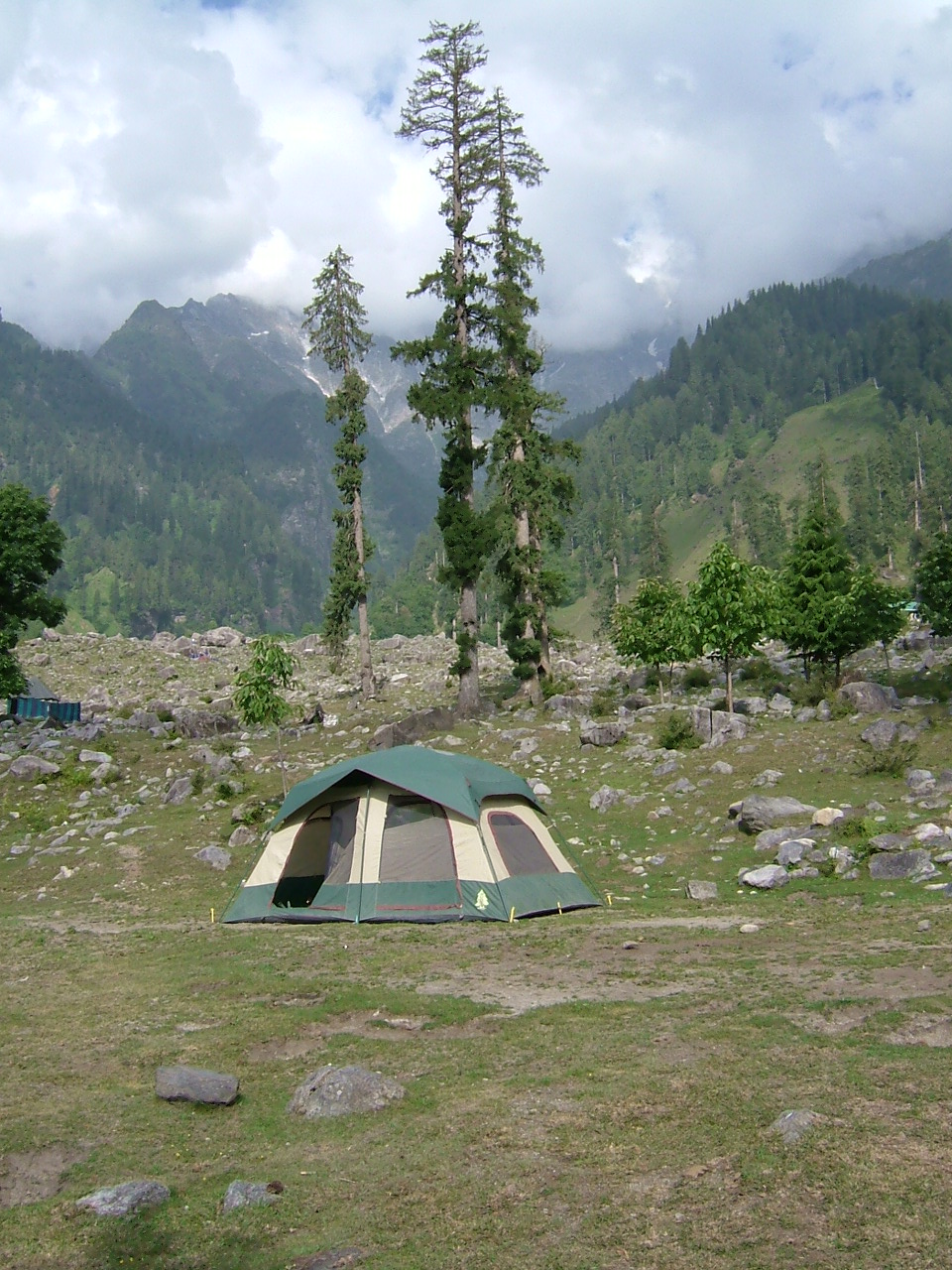
Ahhh, all set up. The first night we were on our own but the second night, two other sets of campers arrived – Europeans but did not speak English or French and they kept to themselves so we did not get to know them at all.
Travelling through the Himalaya foothills (I hate to call them mountains!) we saw ingenious ways of getting people or items from one place to another –
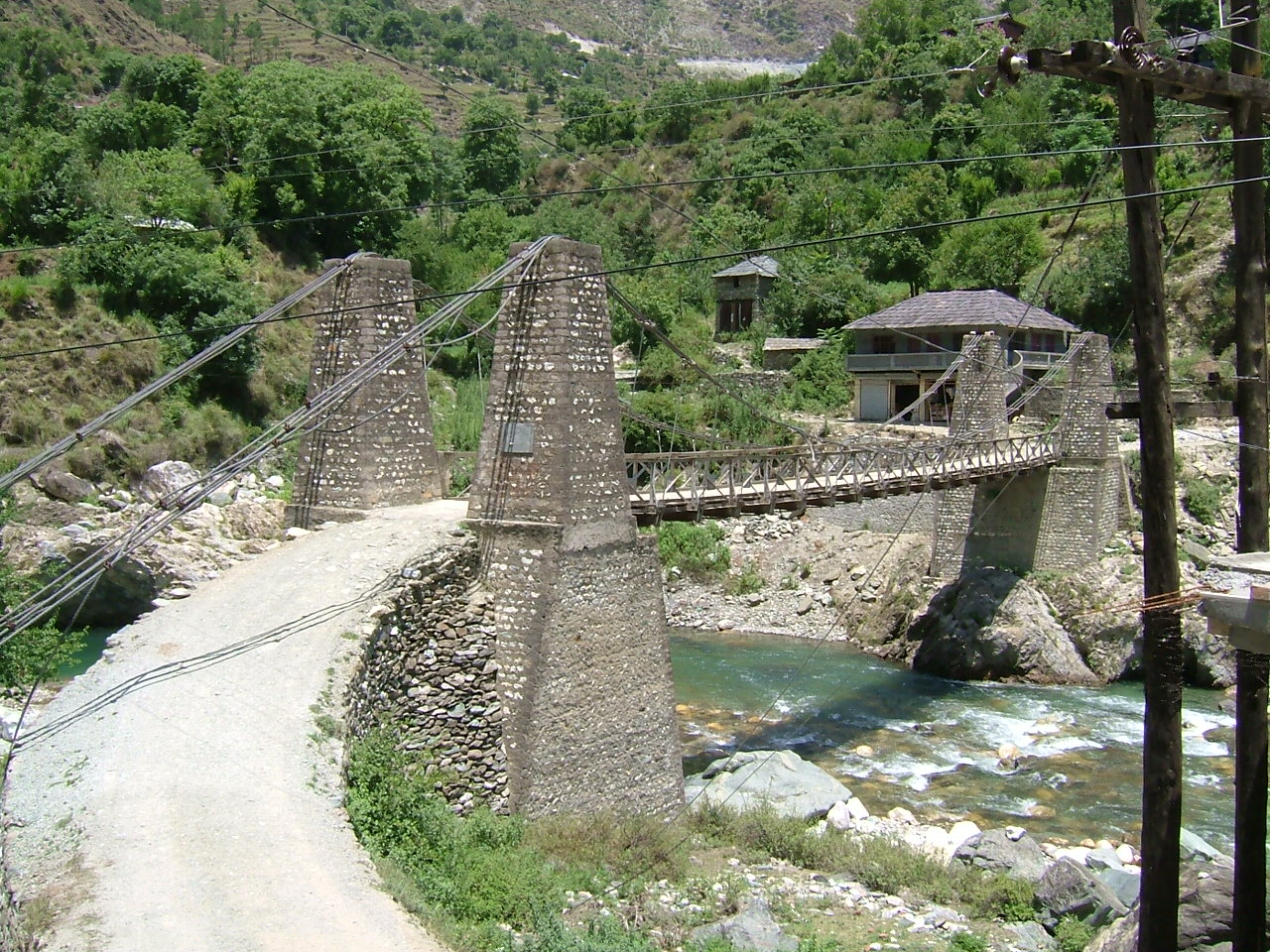
A colonial era bridge.
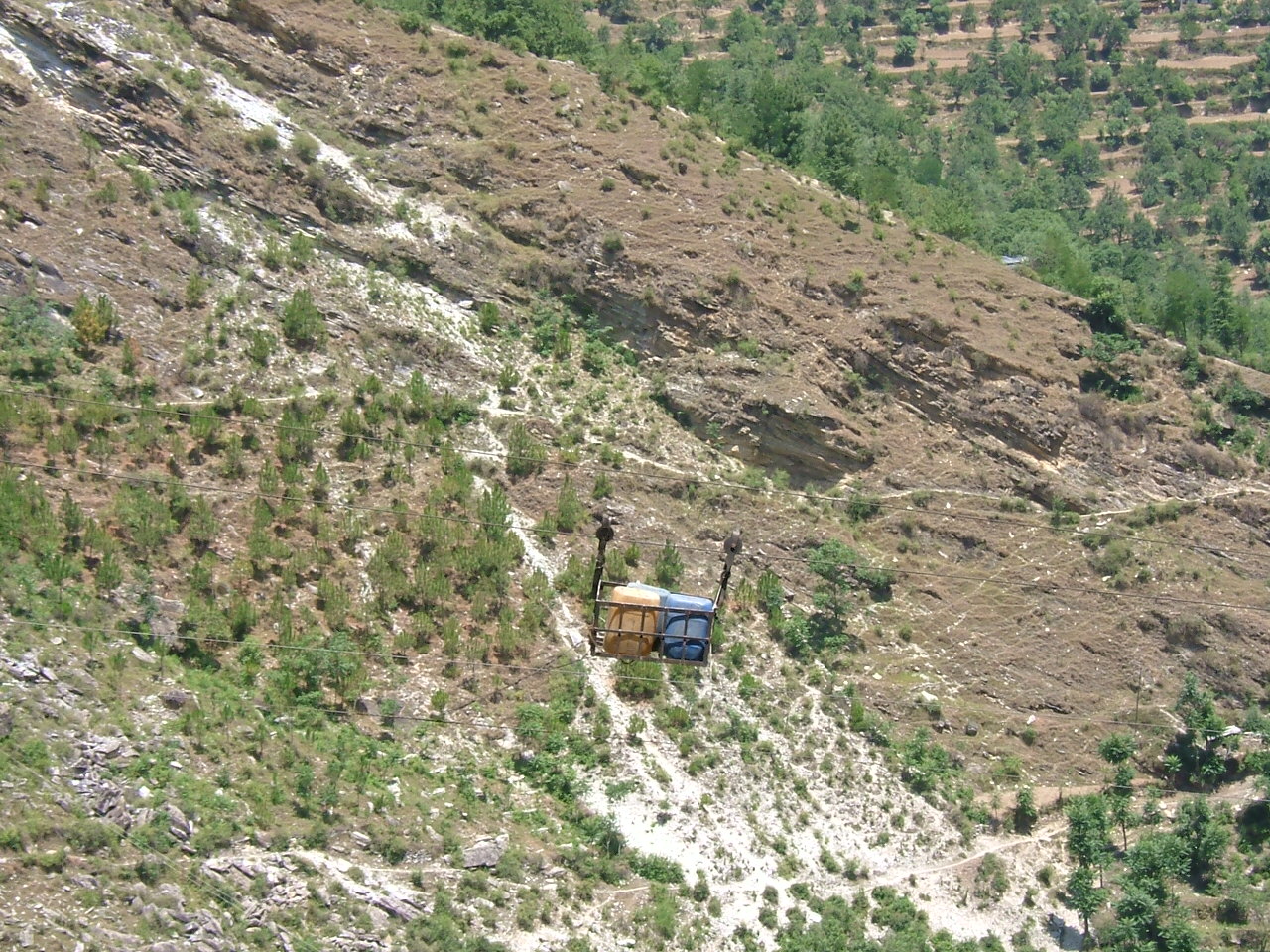
What looked like gas cans crossing the valley on pulleys.
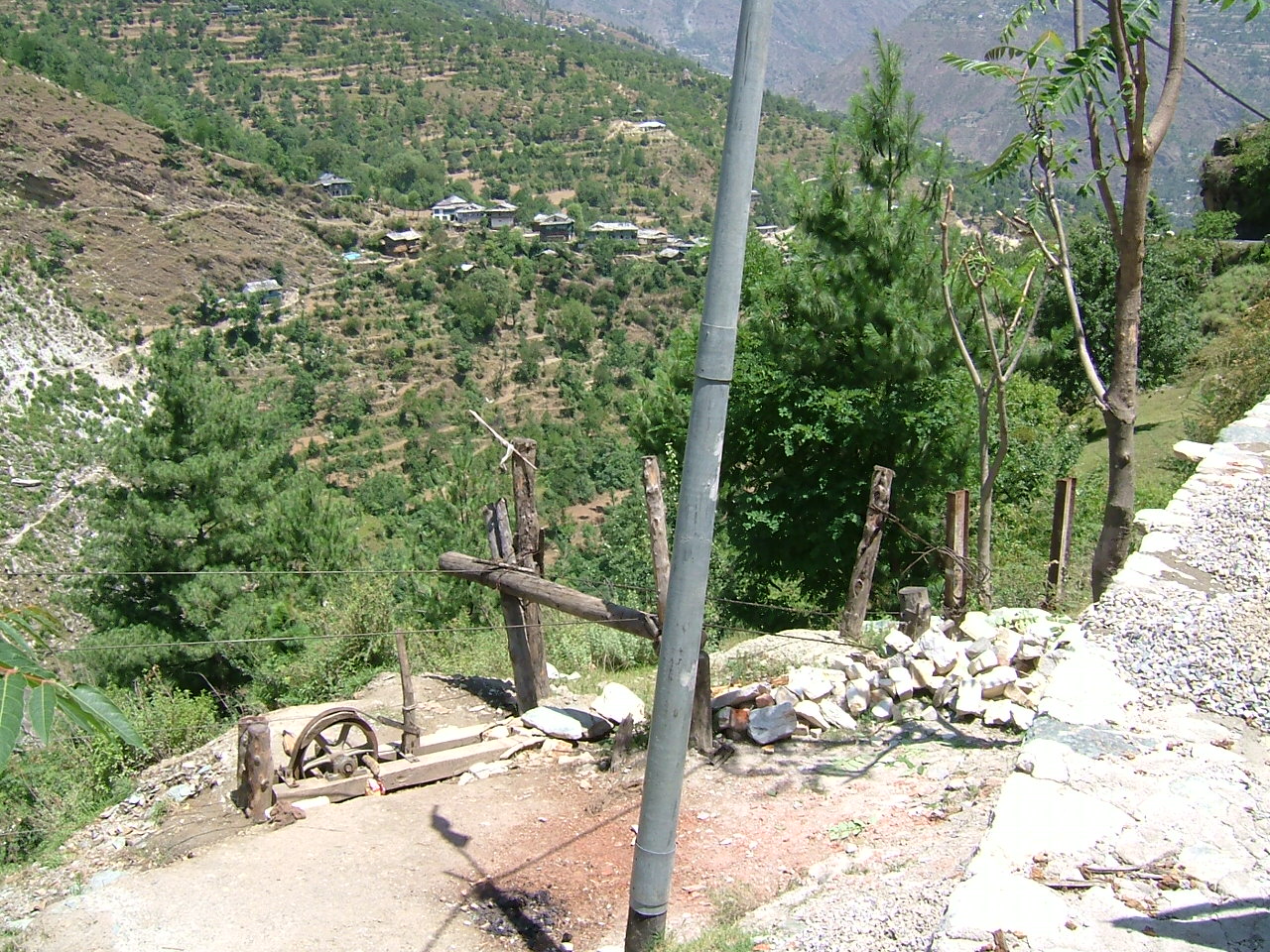
Yup – the mechanism running the pulley!
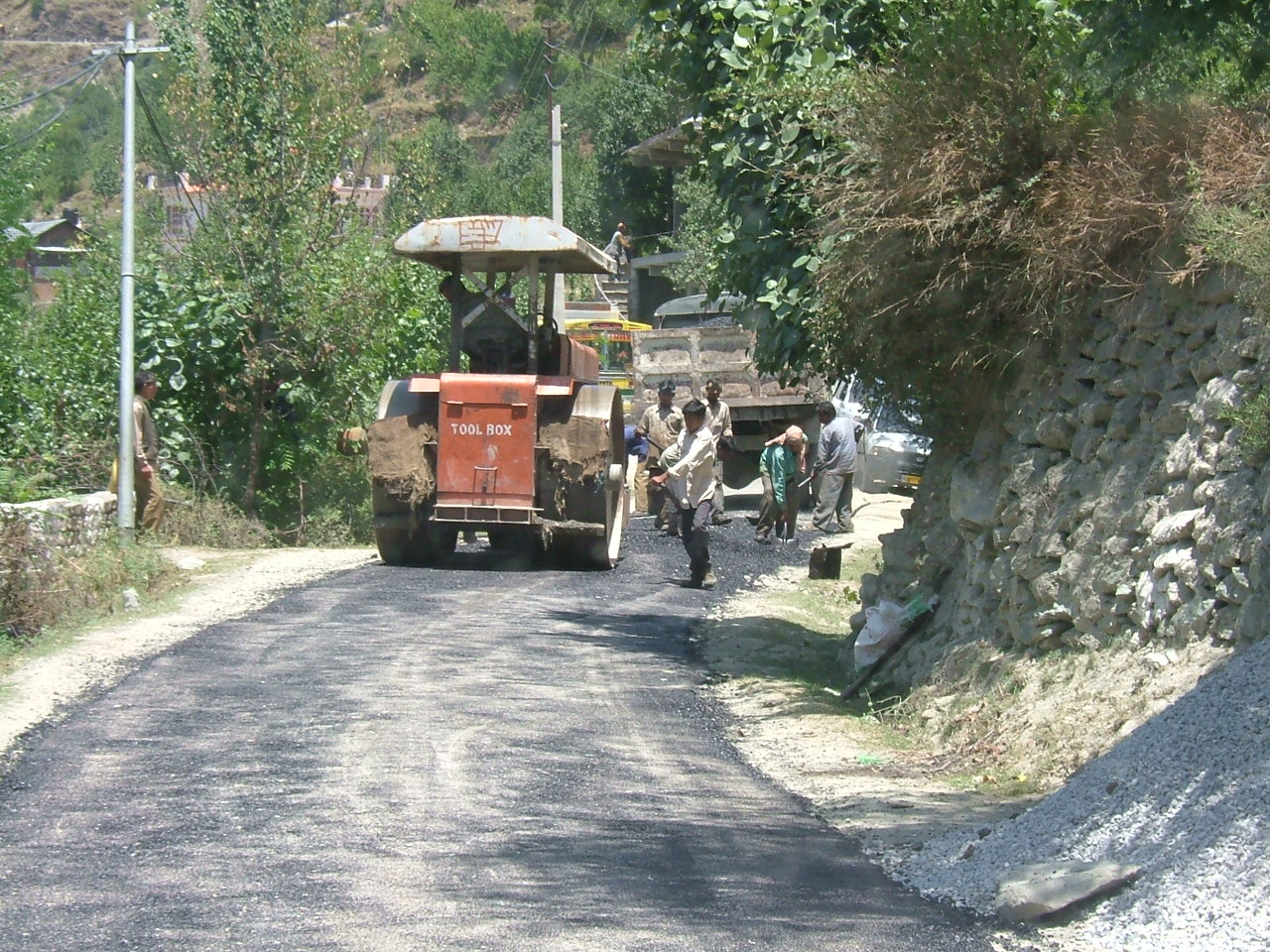
Not to mention road menders at work!
We had a wonderful week exploring a little known part of India with Gypsy and were glad to have had it.
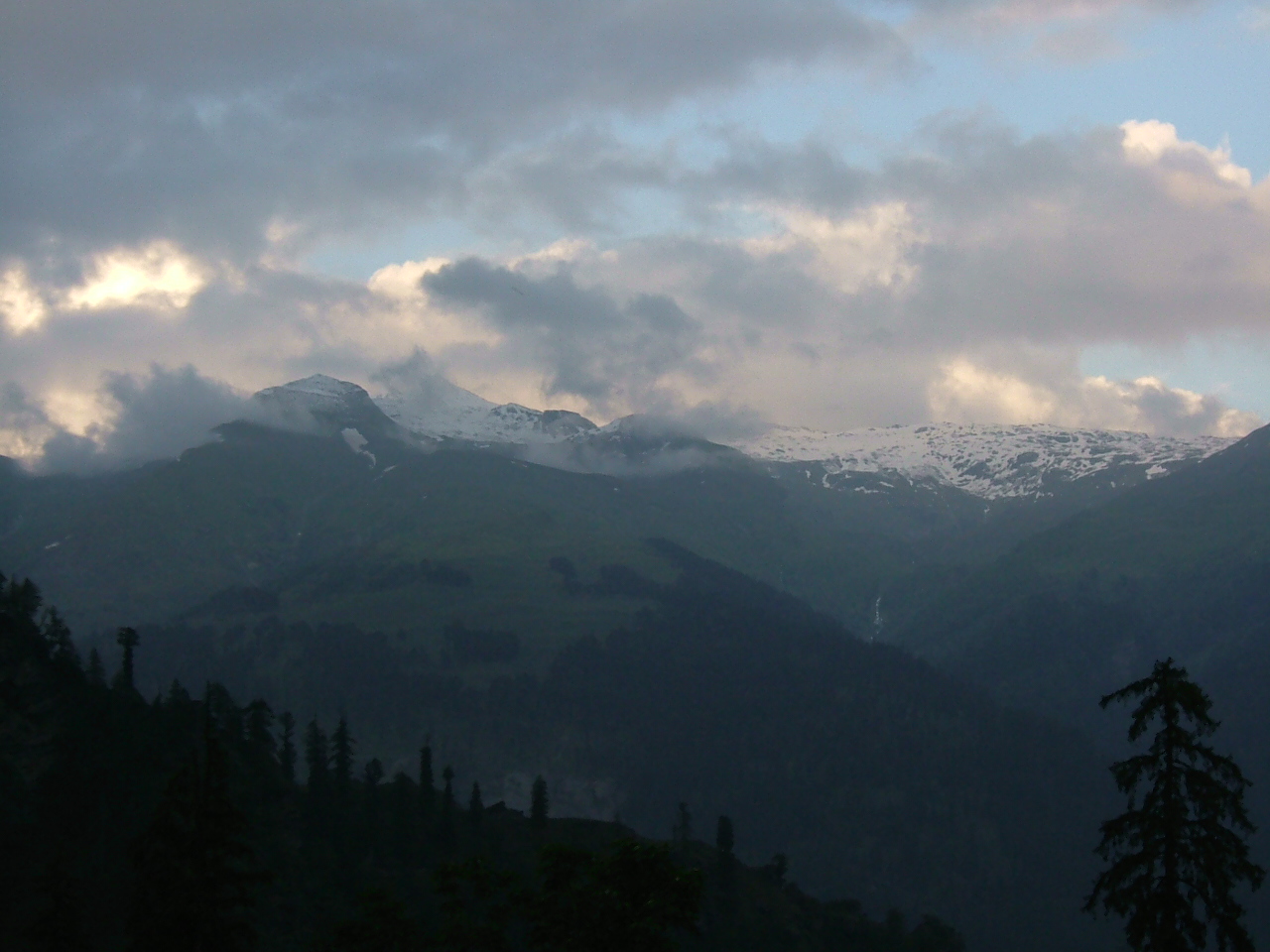
And I will leave you with another view of the hills/mountains – snow covered even in June:
 donnacapper